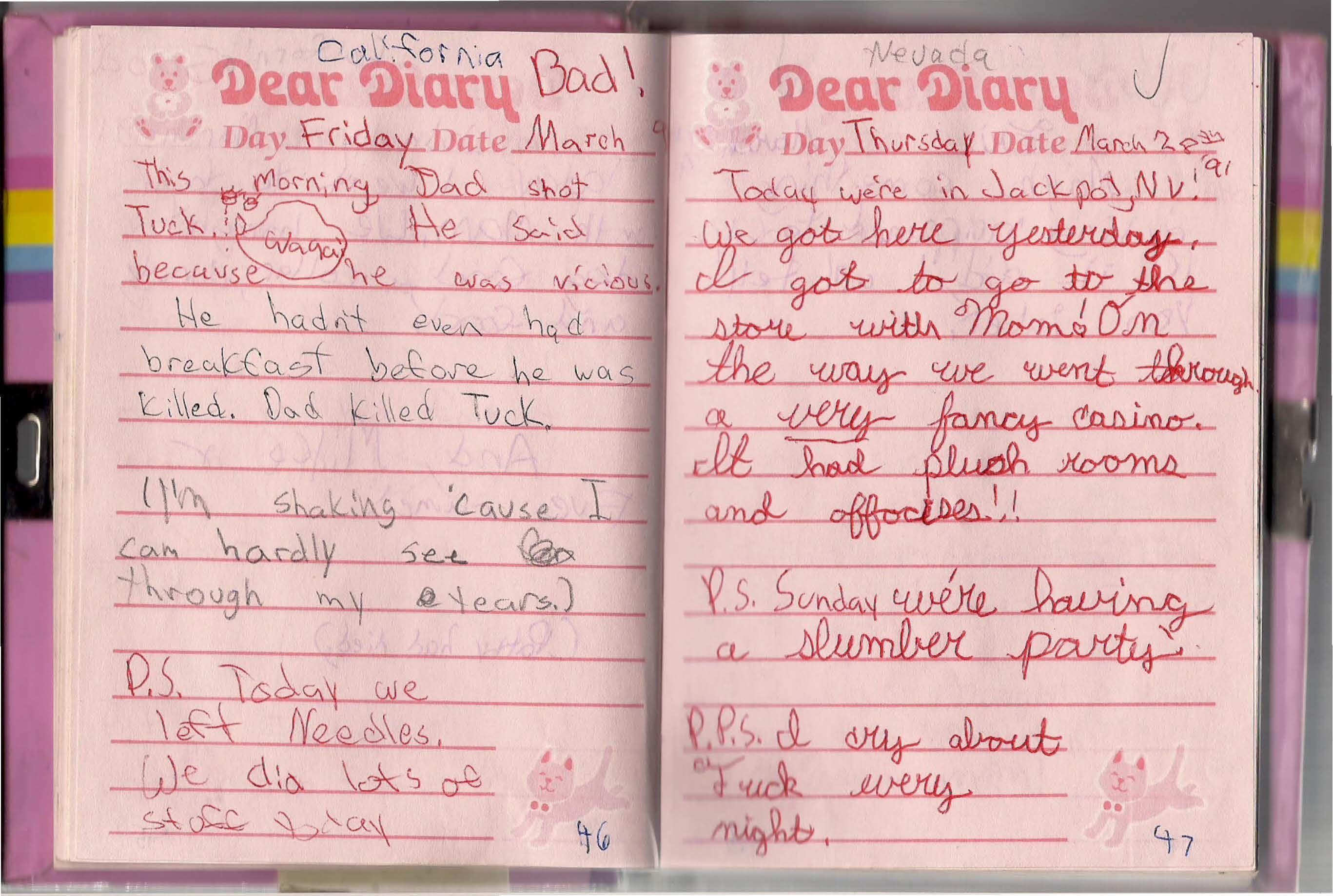
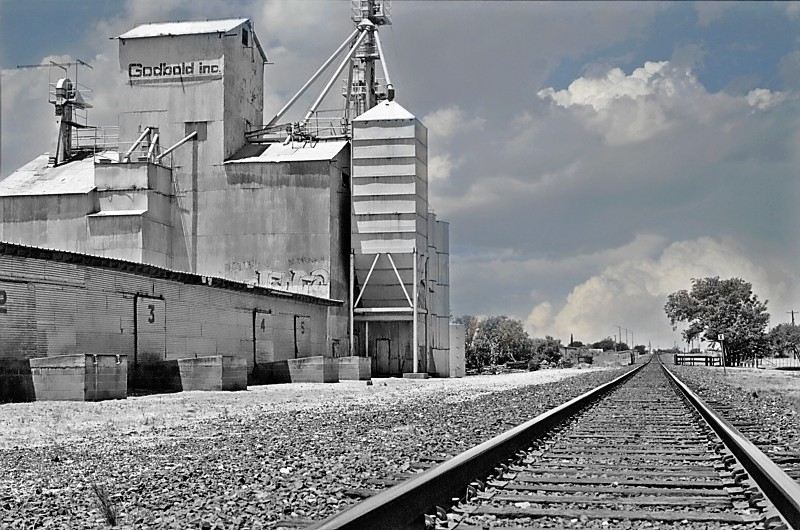
Roads on Her Face #22: Town Kids

There was a big difference between town kids and us. A gaping chasm, in fact, if you asked us. Town kids were afraid to get dirty. Us, we jumped in mud puddles with both bare feet. Town kids were soft, and ate too much candy. We were hard, with leather soles able to run through patches of goathead stickers with abandon. We ate beans and rice. Town kids sat lazy butts in front of the TV all day, while we roamed wild through the desert or forest or on lucky occasions, near the ocean. Town kids needed someone to entertain them, they lacked imagination. While we, when Dad said “Go amuse yourselves,” we had hours and days of complicated games and storylines – we were horses and cowboys, we built entire cities where certain trees and rocks were buildings (the jail, the store, our houses), we had clubs and threw parades and were the heads of armies. In the desert, we built swirling labyrinths delineated by stones and walked through them as if we could not see their outcomes without walls. We had friends in the trees and magical beings all around us.

Yes, I am the oldest, and much of the wild imagination came from the overload of books I’d consumed already. The other kids followed me because they had no other friends, and because my age and the fact I often had to watch them made me default leader. When they were older and off with their own crowds, other boys, I missed them though I might not have realized it at the time. My little sister doesn’t remember most of those wild free times, being the baby and not included in the complicated little hierarchy we had established in those road-days. She was 4 or 5 when we settled in New Mexico. I think she feels like she missed out, in a way, and maybe she did.

When we wanted to insult each other, we might call each other town kids, or maybe dweeb or dork, because those weren’t on the list of forbidden insults that might get a swipe from the belt around Dad’s waist. We came up with some of our own names, like “weed” or filthy little wretch, and those were worst and stung the most. We had fistfights, for a while, until we stopped. We shot each other with BB guns and stabbed each other accidentally with knives, and decided not to rat each other out to the grownups. Rowdy and I ganged up on Reno, and he and Rowdy ganged up on me. Sophie was the baby, the outcast that we didn’t want to have tag along. She turned out to be one of the coolest of us, though, tough and self-assured. She has us and the trickledown meanness of our clan to thank for that.

We didn’t speak about our parents much when we were off alone. It was unspoken that Dad was in charge, and that Mom got picked on the way Sophie did. When they fought, more often in the latter days, we merely made ourselves scarce and kept quiet, not wanting to draw any of the overflowing cauldron of ire our way. We protected each other from outsiders, knowing what it felt like to be broken from the herd and left alone to face strangers, the way antelope are picked by lions from the outskirts of their crowds of brethren.

The road and the way of life left lasting scars and opened minds (it calls me insistently, all the time). I like the person it made me, the inner toughness it left, the appreciation for everything it instilled. I hope my brothers remember it always, and I hope they’ve gained some of what I did from the experience. I thank my dad for that, if nothing else. He gave us a start in this life that most people never dream of.

I still think we’re better than the town kids.

Roads on Her Face #21: How School Happened

It’s more fun to tell stories than to talk about logistics, but the logistics of “how stuff happened” are always the parts people want to know more about. How did you eat? (Mostly with our mouths). Where did money come from? (It grew on trees). How did you get so smart? (I didn’t go to public school, much).

School the way most kids did school wasn’t really a viable option, given Dad’s penchant for pissing people off, landing in jail, or general anti-social tendencies. It’s hard to catch the bus when you’re 40 miles on a dirt road from the nearest bus stop. School officials tend to ask questions that no one is prepared to answer, such as “Where are your school records? Do you have an address or a phone number?” Somehow, we were accepted at many schools all across the country, mostly I imagine because we brought in extra cash to the district as low income little desk-occupiers. No one ever followed us when we left after a few weeks or a month, and I wonder if anyone ever noticed. I didn’t get too close to most of my school acquaintances, who were usually of the lonely outsider type anyway. They were just glad to have someone to sit with at lunch, and I was glad not to have to try to talk to a group of kids at once. I was much better one on one. I didn’t particularly want them to come over to play in our trailer or car, and I wouldn’t have known what to tell them when they started asking questions. I was savvy enough to know that I was vaguely ashamed of us, but also proud that we could make it living this way when I knew most of the people we met hadn’t the vaguest idea how we survived. I liked the idea of being self-sufficient, and still do, though now I realize how heavily we relied on government aid most of the time.

Now, I want a homestead off the grid somewhere in the hill country in Texas. I want chickens, and maybe mini-goats, an art studio, and a big spread that I can fence off and hide in. I’ll fit right in in Texas.

So, school- my mom’s daddy, Papa, had put some money aside in a savings account for me when I was born. Instead of having it for college, it got tapped into much earlier to enroll me into an expensive Christian satellite school program- well, expensive for homeless folks. I think it may have been between $200 – $500 for the whole school year, very cheap especially considering the quality of the education (even with all the Bible parables sprinkled in). I’m guessing some of the rest of that money went to food, and probably beer. We were able to get the student and teacher books, the tests, study guides, and lesson plans. I would do school in the morning and have the rest of the day off. When a dedicated kid sits down and completes all the schoolwork typical in a normal public school day, she should be done before noon. So much time is wasted in timekillers, recess, and babysitting that it’s no wonder kids are so under-educated. By the time I surpassed my mom’s math education, I was easily schooling myself and honestly grading my own work. The other kids were young enough that reading and some math and coloring were good enough, and by the time we settled in one spot and enrolled them in public school for the rest of their school years, they only had a few missing years of education and still easily tested into their respective grades. They went to a small New Mexico school that also needed more desk-warmers, and the accompanying grant money.

I went to two full years of public school my last two years of high school, where I got the requisite sexual and partying education every teenager needs. I didn’t even go to some of my classes and still got straight As. I helped the overloaded teachers by explaining geometry to a few of the other students, and they overlooked my occasional truancy and low-cut blouses. I got a full ride to college, too.

Roads on Her Face #20: Push Came to Shove

There are things I’m still pissed off about years and years after they happened. I wish I could let them go, but even if I laugh them off now they still hang on to the edges of my psyche. The school zone ticket I got after school hours, and the small-town asshole judge that talked with the offending officer about their upcoming fishing trip, after the “trial.” The fat woman who loudly asked what was wrong with my brother’s face, when he got out of the hospital after being wounded in Iraq. The old bag who threatened to call the police in a park somewhere in Idaho, who was sure the ragged little kids on the swing set had to be good-for-nothings.

You have to take a break now and then after hours on the road with kids, and public parks across the states are a quiet place to rest and let them out to run off some energy. Parking lots and rest areas do in a pinch, but green grass, shade, and jungle gyms do a lot to tame the wild beasts.

It was a cloudy day, almost chilly. We must have been headed south, skittering like leaves before a winter storm. We were trying to park overnight, so we had to keep a low profile and not look like we were planning to do what we were planning to do. The kitty was beside the car with her cotton rope leash tied to the side mirror. She lay quietly in the grass, being a smart kitty.

Mom was reading in the car, and Dad was listening to the radio. Sophie was sleeping quietly, and Reno was driving a Matchbox car through the Sahara-like dunes of the sandbox on one side of the playground. Rowdy and I were over by the swings. “Push me!” he called, swinging his legs and looking back at me. From out of nowhere a fat kid with cheeks like biscuits arrived on the scene. He made a beeline for my brother and announced “I wanna swing!” I looked around, and didn’t see any parents.

Shit! I hated confrontation, mostly, though I didn’t avoid or mind the shot of adrenaline that came when you knew you’d have to do something soon. The fatty was way bigger than Rowdy, who was staring up at him in blue-eyed shock. We weren’t used to people arriving on the scene. We didn’t have to talk to other people, and most of the time we weren’t supposed to.  Fatty unceremoniously shoved Rowdy off the swing. OK, time to do something.

I was a lot taller than fatty. You could tell he didn’t often talk to girls, mostly by the cheeks and the small piggy eyes. They glared at me out of his reddening face as I walked right up to him.

“Get away from my brother!” I said, picking Rowdy up and grabbing the swing. “We were here first, go play somewhere else.”

From behind me I heard the war-shriek of Grandma. “You get away from my grandson, I’m going to call the police!”

“Shut up, lady,” I said, the adrenaline showing up. I was talking back to a grownup I didn’t know, and that was a new feeling. I swallowed the lump in my throat and turned to face her. “You can’t do anything about it.” I wanted to tell her how her grandson was fat, and she should make him exercise. Also he was a bully, and that he needed to get his ass kicked. I wanted to tell her that neither she nor he nor anyone else had the right to push us around, but “Shut up” was going to have to do.

Her mouth hung open, and I could see the family resemblance clearly, though she probably hadn’t had as much food as this kid, being raised in the Depression. She hadn’t been spoiled, so she made sure her grandpiggy was. Also I decided it was time to get back, because she had said “police” and Dad would not have taken kindly to anything involving police. Us three little ragamuffins scurried quietly back to the car, flying under the parental radar. My heartbeat slowed, but I never forgot. It was easier to tell people to fuck off after that.

Roads on Her Face #19 : First-rate Forest Service

When you mention you’ve lived in Mammoth Lakes, California, people naturally assume you are a wealthy brat whose parents have a ski lodge in the mountains, built especially for escapes a few times a year from the sprawl of L.A. We didn’t live there in the winter, though, as we would head south to the blessedly warm desert before the first hints of snow. Living in a car limits your environment, seasonally.

I remember the sweet smell of pine sap and the soft needles underfoot that let you creep up on unsuspecting brothers, the glistening black carpenter ants that hurried up the superhighways of the ponderosas which seemed plain as lighted roadways to the ants, the highways that you could strain your eyes and imagine you too could see. I remember the hush and sighs of the forest, the caws of crows and the yammering blue jays, the tap-tap-tap of the brilliant woodpeckers. I remember how a short walk would take you into the woods, away from anyone. I would settle down beneath a tree and read or write in my journal, cushioned by bark or perched on lichened-softened rocks, I would revel in the protection of the forest. After empty deserts, I felt so protected, so hidden, between the trees.

We were living in the car, then, either sleeping in the back or the tent. It was dry that summer, so we didn’t bother packing everything up into the car each day. Just our food, to keep it from bears. We were out miles from the edge of Mammoth, tucked into a quiet pocket of the John Muir Wilderness of the Sierra Nevadas. Years later, I picked up a photograph of an eagle at a yard sale. John Muir’s signature is penciled across the back- I don’t know if it is a fake but I knew who he was because of his name on the wilderness signs.

Occasionally we would see rangers, but they left us alone. We weren’t littering, and we kept the campsite straightened up so it didn’t look like we’d been there for weeks. I think they felt sorry for us kids, and didn’t want to make things harder for us. They weren’t hard, though, that’s the part no one ever realized. We were happy being kids, and the forest was a playground made just for us.

My book supply was stocked by the bookmobile, driven by Miss Heidi and parked weekly not far from where we were camped, providing “forest service” to outlying homes and the occasional itinerants. She was warm and friendly, and loved books almost as much as I did. Right away she got me a library card, and handed me the first list for the summer reading program so I could get started.

“You’ll have to work to catch up to the other kids, they have a few weeks’ head start,” she said. “Do you want some help picking out books?” I shook my head, and in minutes had a stack that took Mom and me two trips to load into the car. We had library bags with the string top, so we had to hold the bags to our chests so the books didn’t break free from the cheap plastic material. I was back each week, with every single book in those bags on my “read” list, even the little kids’ books we picked out for the younger ones. I gave Heidi one-page book reports so she would know I’d read them. After the first week, the amazement on her face changed to a welcoming smile. She wrote me letters for years General Delivery or to P.O. Boxes in Nevada or Oregon or Arizona, telling me about her husband, sons, and her dog. Another touchstone, and a very grateful little girl.

Ghosts

Let me say that Bisbee is indeed full of ghosts, drunken nights, ravaged earth and scarlet water. And lots of tourists. I have some beautiful road-photos to share with you soon. I had a wonderful birthday week, thanks to my love. He did a good job this year.

P.S. My love kindly came up with a new name for a blog for me, after brushing away the remnants of a wonderful birthday meal. Coming soon “Crumbs on Her Face.”

~ A

Roads on Her Face #18 Touchstones

People can be touchstones, as well as places. There are those who, when you reach out for them, are anchors in this constantly changing sea of time and place.

People can be touchstones, as well as places. There are those who, when you reach out for them, are anchors in this constantly changing sea of time and place. As the type of girl who always had my nose buried in a book, my preferred method of contact was writing letters. Besides not having a phone with which to just give people a call, it was always easier to express myself with time to think and a pen and paper in front of me, ideas coming more freely and no awkward half-formed social skills to rely on. It makes me sad that no one writes letters anymore, only because they meant so much to me through the years. There were people who wrote back to me, who stood as touchstones and took the time to make me feel as if I did have friends, as if I were not so alone, as if I were not strange. There was Heidi, the bookmobile lady in Mammoth Lakes, California, who was floored when this little wood-nymph child from the campground read every single summer program book on her list and wrote book reports for her to be proudly presented each time she parked the long white bus in its weekly spot. There was Jacci, my oldest and first friend and the only one my age. There were Wes and Elaine, the couple with their little ranch in the foothills of Nevada. They may have looked at me with pity, but they also had hopes for me. I know they knew that I would have to make my own chances in life, that starting out in life homeless too often leads to drug addiction, or jail, or hopeless-to-useless-to-nothing. I think they wondered what would happen to me, and that they wished they could help me succeed. They did, even if they don’t know it.

Driving to Burning Man for the first time on my own, I stopped at the Stagecoach casino off Highway 95 next to the gas station with an old photo of a little boy on its sign. As I entered the dark, smoke-scented bowels of the casino I saw my dad for a second with a beer in his hand, leaning against the bar in front of the ex-prostitute bartender with only a few teeth and none of her dignity left. I remembered the hopeful feeling I’d get when we rolled into Beatty after a long stint on the road, or after money had gotten tight and we needed a place where Dad could work for a while. Wes always gave him a job doing something on the ranch. He loved me, and he’d let me tag along to the chicken coop or would take me out to the greenhouse where I could pick fresh tomatoes warm from the vine. One time he bought me a purple Huffy mountain bike that I somehow held on to for years, across miles and states and while we had a place to stash it in the trailer. At some point, it was left when the trailer was left.

Wes and Elaine were right next door to a brothel with a crashed plane as a signpost. I’d always peer down the dirt road to the red building hidden in the trees and try to catch a glimpse of a whore. What was it like for those women? What would it be like to sell yourself all day?

I walked slowly through the casino, a dizzying sense of déjà-vu slowing my usually fast pace. A flash of me getting caught beneath a rickety merry-go-round and being dragged in a circle while the flesh tore from my thigh, the faint memory of Wes filming us kids playing in his front yard, my dad soaking in the hot springs at the Beatty trailer park. All of the letters through the years, the cow Wes named after me, the glances I would catch Elaine giving me that almost looked like jealousy. He had his own kids, but they were gone.

I sat in the café in the back of the Stagecoach and had coffee, listening to the servers chat about town gossip and stare at the tourists. I didn’t see much that had changed, but when I drove by the ranch I remembered Wes had died and Elaine had moved away. The place looked the same, the strong old cottonwoods rustling their coin-leaves over a bright spot in my childhood, over the earthy smell of the chickens and the peace I would feel there.

Happy Birthday, fellow Scorpios

I’ve made it 31 years so far, today. It’s odd how looking back I can remember standing there looking at my 8-year-old feet, my hands, peering out from 8-year-old eyes without the beginning of crow’s feet spreading softly, so many years later. I can look forward, too, to see my mother’s hands becoming mine in 20 more years. I feel as incredulous now as I know I will then, wondering what happened to all that time. Wondering how on earth all of this could possibly end.

I keep running into the writerly road block, the one that says I was supposed to be successful so much earlier. The one that makes you feel like a failure, no matter how many times you publish something or someone tells you you have talent. Some people call it drive, but we all know it’s just desperation. How can you be successful when you sit on your ass and do nothing, lamenting the wasted time that you are wasting that very second? The best solution to all of this, I’ve found, is just to have a sense of humor. We’re all in the same boat, people. Pick up an oar once in a while.

Love, to all of you.